Pest Control Service Storm Lake operations deliver systematic pest elimination through biological targeting, barrier chemistry, and structural exclusion. Property owners seeking a pest control service near me receive diagnostic assessments that identify entry vectors along masonry foundations, sill plates, and utility lines before applying interior and perimeter applications.

Pest Control Service in Storm Lake is a professional biological eradication and physical barrier installation process designed to eliminate insect and rodent populations from residential, commercial, and agricultural processing structures across Buena Vista County.
Every service reflects the same meticulous attention to detail, whether it's a single job or a larger pest control service project across Storm Lake.
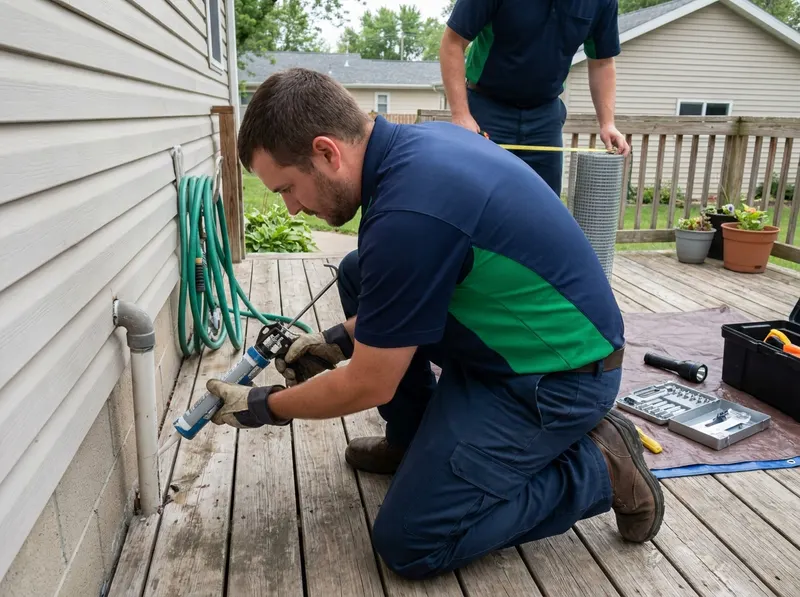
Field mice, deer mice, and Norway rats exploit foundation breaches as narrow as one-quarter inch during seasonal agricultural harvesting across Buena Vista County. Rodent control deploys tamper-resistant mechanical traps inside insulated envelopes alongside exterior perimeter bait stations containing anticoagulant rodenticides. Technicians inspect basement rim joists, crawl space vents, air conditioning chase lines, and attached garage thresholds to uncover every hidden access vector. Sealing protocols utilize chew-proof stainless steel mesh, heavy copper weave, and elastomeric silicone-polyurethane sealants to permanently sever entry corridors. Interior attic spaces and insulated crawl spaces undergo thorough sanitization to extract biological pheromone trails and rodent droppings, halting secondary recolonization from outdoor populations.
Get a quote →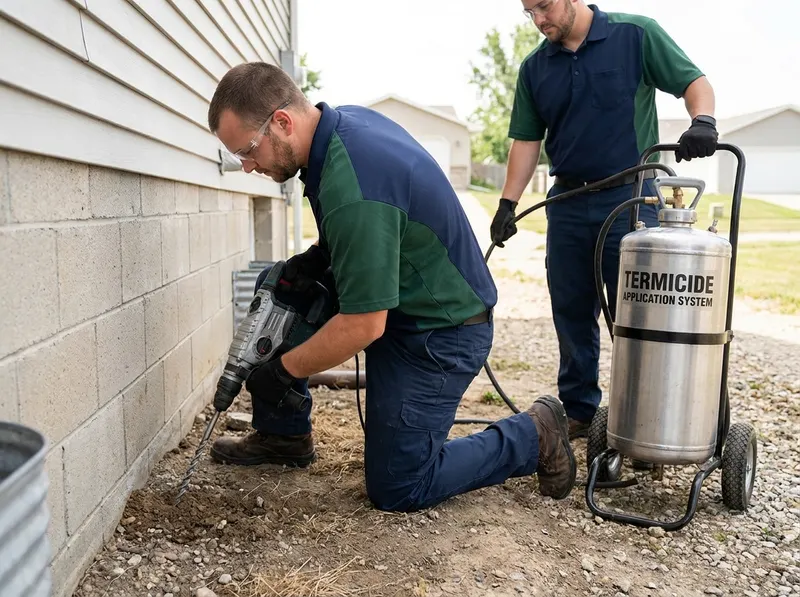
Subterranean termites compromise structural framing by feeding on cellular wood components beneath ground level, moving through sheltered mud tubes along masonry walls. Remediation involves continuous trenching of perimeter soils down to the top of the foundation footing, injecting non-repellent liquid termiticide at a calibrated rate of four gallons per ten linear feet, and installing subterranean monitoring stations around the drip line. In structures built on concrete slabs or monolithic foundations, precision core drilling penetrates concrete walks and patios to apply continuous chemical zones beneath adjacent pads. This specialized method prevents structural hollow-out, secures sill plates and floor joists, and creates an undetectable chemical defense perimeter that foraging worker termites transfer back to eradicate the subterranean queen.
Get a quote →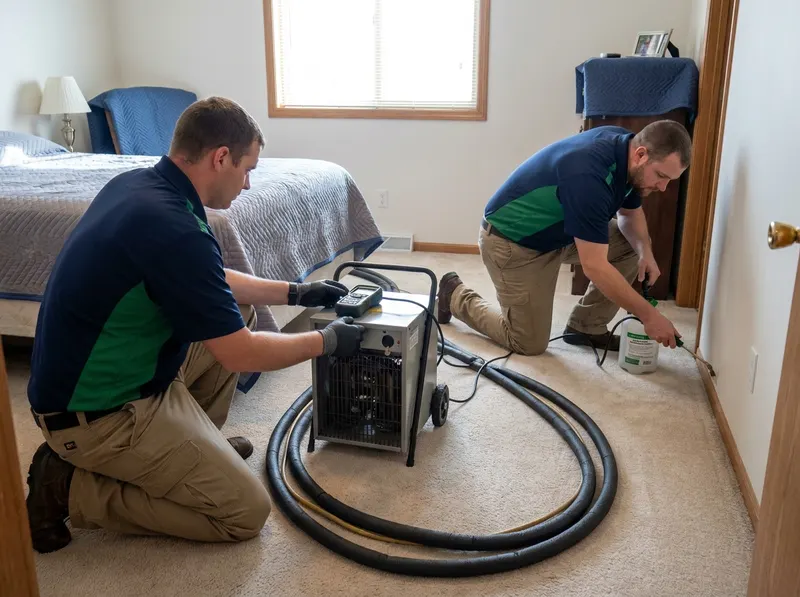
Cimex lectularius infestations disrupt sleep, inflict painful bites, and cause persistent psychological stress across multi-family and single-family residential bedrooms. Eradication utilizes high-output industrial thermal heaters that raise interior ambient room temperatures to an exact lethal window of 125°F to 135°F for four continuous hours to denature insect proteins at all life stages, including heat-resistant eggs. Specialized high-velocity air movers circulate heated air into mattress seams, box springs, baseboards, and interior wall voids. Dual-action chemical residual dusts and long-lasting desiccants are simultaneously injected behind electrical faceplates, switch boxes, and floorboard expansion joints to establish months of continuous structural protection against potential reintroduction.
Get a quote →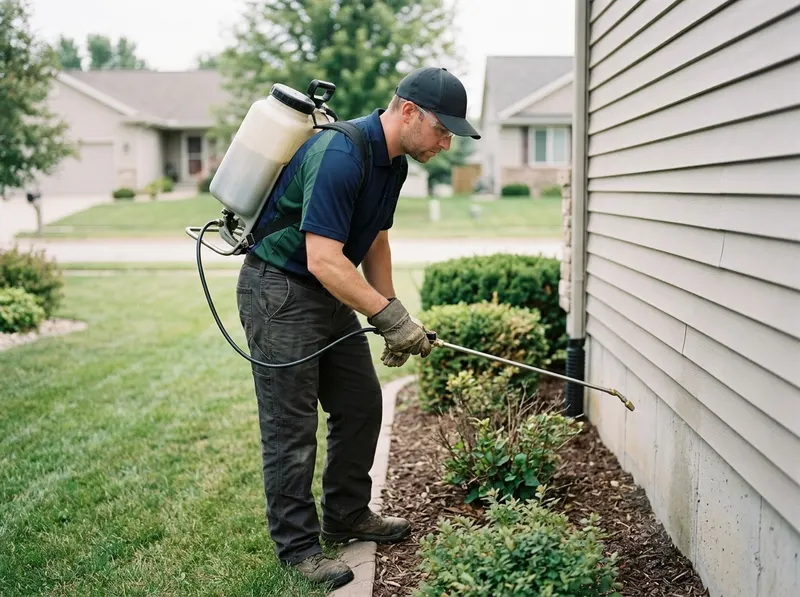
Exterior boundary spraying neutralizes perimeter invaders before they cross the exterior envelope into climate-controlled living zones. Technicians apply an odorless, microencapsulated pyrethroid suspension extending three vertical feet up the exterior foundation wall and six horizontal feet outward across adjacent turf, mulch beds, and hardscaping. This specialized barrier stops boxelder bugs, clover mites, field crickets, millipedes, earwigs, and wolf spiders from crossing window sills, door sweeps, and masonry mortar joints. The chemical suspension binds to porous concrete, brick, and siding materials, remaining active even when exposed to direct summer sunlight, fluctuating humidity levels, and frequent rain events common throughout Northwest Iowa.
Get a quote →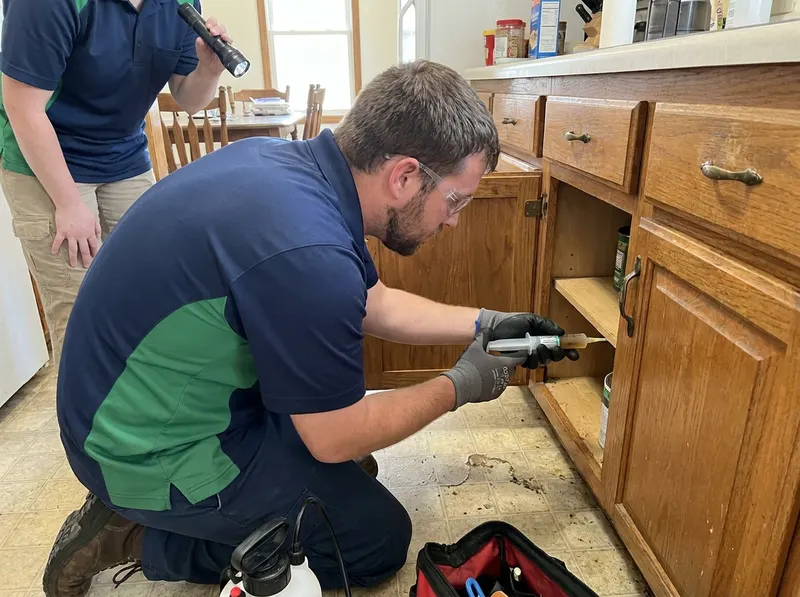
German cockroaches colonize warm utility zones behind refrigerators, dishwashers, hot water heaters, and food-prep cabinetry, carrying pathogens like Salmonella and triggering severe respiratory allergies. Complete eradication combines modern insect growth regulators (IGRs) that chemically disrupt molting cycles with targeted indoxacarb and dinotefuran gel baits placed strategically in harborage zones. Precision vacuuming utilizing certified HEPA filtration units extracts live insect clusters, discarded egg casings, and allergen-heavy frass from motor housings and baseboard tracks. Follow-up diagnostic inspections identify lingering pockets in false cabinet bottoms, ensuring total chemical uptake and preventing bait aversion across reproducing generations.
Get a quote →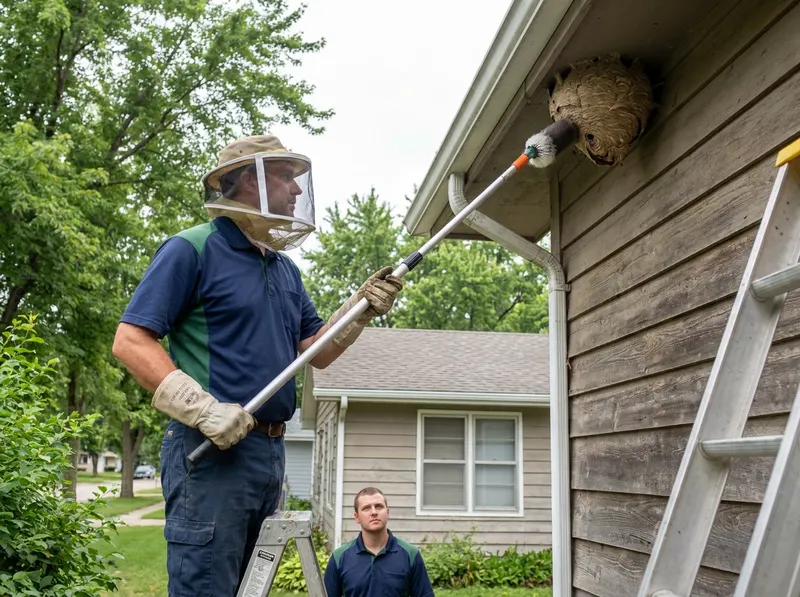
Paper wasps, bald-faced hornets, and ground-nesting yellowjackets establish aggressive colonies under roof eaves, inside architectural soffits, beneath elevated deck boards, and within structural wall voids. Direct pressurized chemical injection immediately neutralizes airborne adults and hidden brood populations using rapid-knockdown pyrethrin aerosols. Technicians wear protective sting gear to detach paper nest structures physically, scrape residual anchor attachments from building surfaces, and treat the immediate substrate with long-lasting repellent dusts. This critical surface treatment deters displaced foraging wasps and secondary mated queens from rebuilding colonies in the identical nesting site during the warm summer and fall months.
Get a quote →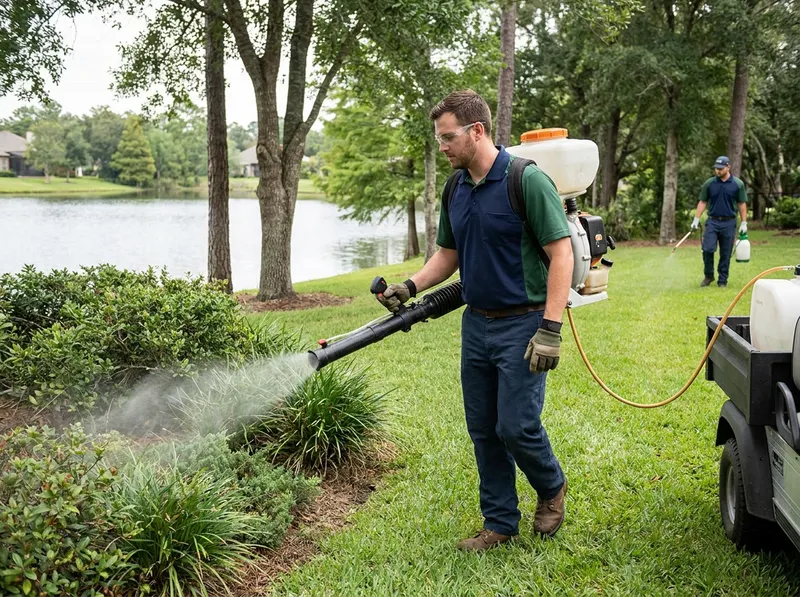
Properties situated along lakeshores and open drainages encounter intense densities of biting mosquitoes breeding in standing surface water and dense shaded foliage. Barrier mitigation utilizes automated backpack mist blowers applying microencapsulated adulticides directly to ornamental shrubs, broadleaf turf, tall ornamental grasses, and under-deck moisture zones where adult pests rest during daylight hours. Paired with slow-release biological larvicides containing Bacillus thuringiensis israelensis placed into uncirculated gutters, catch basins, and marshy low spots, the treatment breaks the reproductive vector. This continuous protocol reduces biting nuisance populations, curbs insect-borne pathogens, and restores full utility to outdoor patio spaces.
Get a quote →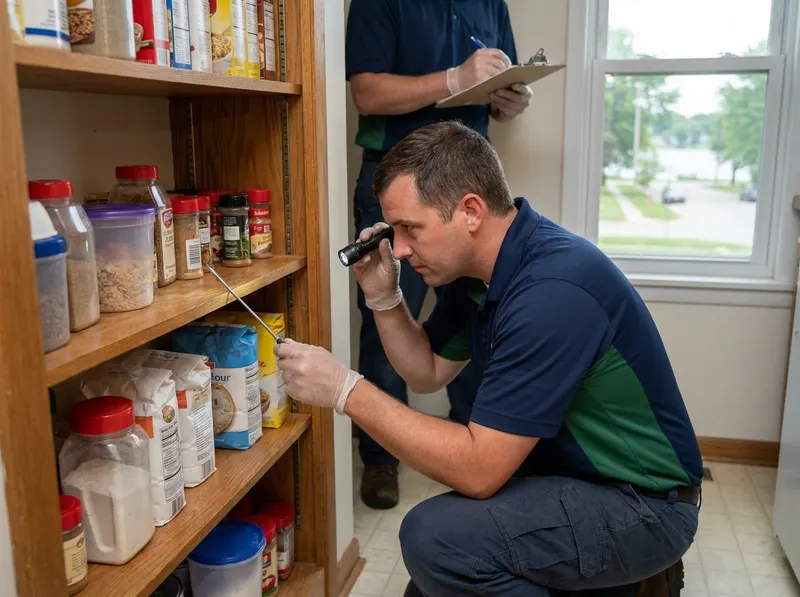
Indian meal moths, sawtoothed grain beetles, and granary weevils contaminate dry food products in pantries, basements, and bulk commercial grain storage facilities. Technicians perform systematic diagnostic inspections of dry pantry goods, pet food storage, and birdseed containers to isolate larval clusters and identify source packages. Pheromone aggregation traps capture airborne adult moths to monitor population density while halting adult mating behavior. Cracks, wire shelving brackets, and cabinet kickplates receive targeted botanical dusts and crack-and-crevice treatments to eliminate hidden pupae and emerging larvae without introducing volatile synthetic toxins into human food preparation zones.
Get a quote →You get a firm, itemized quote for your pest control service before any work begins, no surprises, no pressure.
Careful prep, tidy work, and a full cleanup when we are done. We treat your home and belongings like our own.
The same trusted, background-checked team from the first call to the final check.
For isolated structural activity such as a single yellowjacket nest under an eave, localized silverfish in a damp basement corner, or minor ant trails across a kitchen countertop, a targeted spot treatment provides immediate control; for ongoing biological pressure, seasonal perimeter protection combines exterior barrier applications with internal void dusting to halt migrations before entry occurs. The trade-off centers on cost and long-term protection: single-visit interventions carry lower upfront expenditure starting at the $150 minimum, whereas systematic perimeter programs involve scheduled seasonal reapplications to withstand the rapid chemical breakdown caused by high summer humidity and agricultural dust. When structural woodwork shows signs of subterranean termites, localized topical spray fails because colonies nest deep beneath the soil line; comprehensive liquid termiticide trenching or bait station matrices are mandatory to protect foundational framing, requiring higher investment but preventing thousands of dollars in hidden subfloor rot.
If rodent scratching is heard in crawl spaces, setting snap traps resolves existing specimens inside the envelope, but true eradication demands complete physical exclusion, sealing weep holes, foundation gaps, and rim joist voids with copper mesh and elastomeric sealant. Trapping without exclusion creates an endless cycle of repopulation during the Northwest Iowa harvest season, making structural fortification the critical factor for permanent domestic order. For severe indoor insect pressures such as bed bugs or German cockroaches, localized over-the-counter surface sprays merely induce behavioral budding, dispersing insects into neighboring wall voids and adjacent bedrooms; investing in comprehensive thermal remediation or multi-stage insect growth regulator baiting protocols guarantees complete mortality across all egg, nymph, and adult life stages despite the higher initial project cost.
Every project gets a firm, written price after a free on-site visit. Ranges below for orientation.
Tell us about your pest control service job and we'll send a clear, written quote, usually the same day. Or just call and talk to a real Storm Lake pro.
(319) 422-3011
Storm Lake properties face intense biological pest pressure directly linked to the microclimate and topography of Buena Vista County. The 3,200-acre natural lake creates an expansive boundary for midge hatches, lake flies, and moisture-seeking subterranean termites, while surrounding row-crop agriculture drives heavy rodent migrations into residential neighborhoods every autumn. Older structures throughout the Seneca Street Historic District and near Buena Vista University feature porous fieldstone foundations, hand-hewn timbers, and aged sill plates that require physical exclusion sealing rather than simple surface spraying, whereas modern builds in Emerald Park and Sunrise Pointe Area demand heavy exterior insect barriers to resist the seasonal swarm of boxelder bugs moving off open farmland. High water tables near Frank Starr Park, Chautauqua Park, and along the Storm Lake Marina create damp subterranean foundation conditions where carpenter ants and subterranean termites thrive in moist ground contact. Additionally, seasonal temperature swings along North Central Storm Lake can cause rapid thermal cracking in exterior mortar joints, opening hidden entry routes for overwintering field mice, paper wasps, and pavement ants seeking shelter within conditioned interior wall voids.
Free estimates for Storm Lake & the surrounding area.
 Corviro Pest Management