Flea & tick environmental eradication addresses properties where off-the-shelf aerosol bombs and generic pet shampoos fail to stop persistent re-emergence. Over-the-counter pyrethrin foggers disperse strictly into…
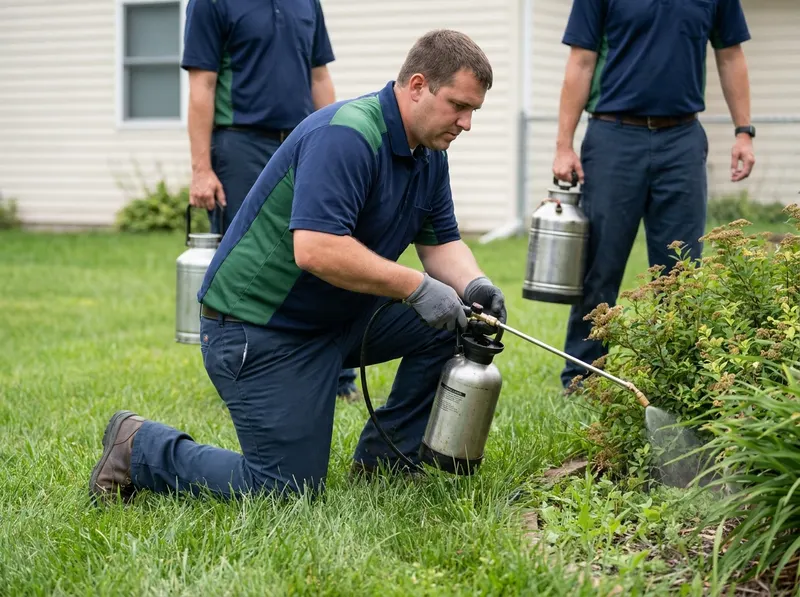
Flea & tick environmental eradication addresses properties where off-the-shelf aerosol bombs and generic pet shampoos fail to stop persistent re-emergence. Over-the-counter pyrethrin foggers disperse strictly into ambient air, settling on horizontal tabletops without penetrating carpet pile, under-furniture recesses, or exterior vegetative resting areas where 95% of the biological biomass exists as eggs, larvae, and pupae. The professional protocol deployed in Storm Lake uses high-pressure hydraulic dispersion to reach the base of turf canopies and non-repellent formulations indoors that break the pupal matrix. An insect growth regulator prevents immature instars from synthesizing chitin, arresting biological development permanently. This definitive multi-stage barrier serves residential structures and rental turnovers across Seneca Street Historic District, College Hill, and North Central Storm Lake, as well as lakeside properties near Chautauqua Park where waterfowl and whitetail deer maintain heavy outdoor tick reservoirs.
Selecting standalone environmental eradication differs from continuous pet-applied veterinary treatments. Veterinary topicals protect the individual host animal through blood ingestion, whereas environmental eradication destroys the free-roaming field population residing in baseboards, subflooring, area rugs, and lawn cover. For severe domestic infestations, environmental treatment is non-negotiable because adult fleas consume blood within minutes of emergence, causing significant dermal irritation and potential tapeworm vectors before host-based pet treatments can act. In properties near Frank Starr Park Area, Emerald Park, and Sunrise Pointe, external migrations from wild urban vectors, such as raccoons, squirrels, and feral cats, frequently re-seed untreated exterior perimeter zones. The mechanical trade-off involves preparation rigor: successful indoor remediation requires thorough vacuuming of all fiber surfaces, complete laundering of pet bedding at 140°F, and a mandatory 4-hour human and animal vacancy period during product drying to ensure total active ingredient adherence.
Environmental remediation steps follow a diagnostic timeline: First, a technical structural evaluation maps larval hot spots, resting perimeters, and humidity corridors beneath decks or porches. Second, technician teams disperse microencapsulated active ingredients paired with an insect growth regulator across targeted indoor floor planes, furniture skirts, and perimeter floor joints. Third, technicians establish a continuous exterior liquid barrier extending 3 to 10 feet out into surrounding turf and shaded perimeter vegetation, terminating tick host-questing behavior. Properties located along Lakeside and the Storm Lake Marina basin frequently encounter higher baseline moisture levels that accelerate egg hatching cycles, requiring precise residual applications calibrated to withstand Northwest Iowa temperature fluctuations without premature chemical breakdown. This targeted intervention halts structural infestations cleanly without requiring long-term recurring subscription contracts.
Every job gets a firm, written price after a free on-site visit.
Tell us about your flea & tick environmental eradication job in Storm Lake and we'll send a clear, written quote, usually the same day.
 Corviro Pest Management