Stinging insect colonies compromise domestic access routes and threaten structural building envelopes when left unchecked throughout Buena Vista County. In established architectural pockets like the Seneca Street…
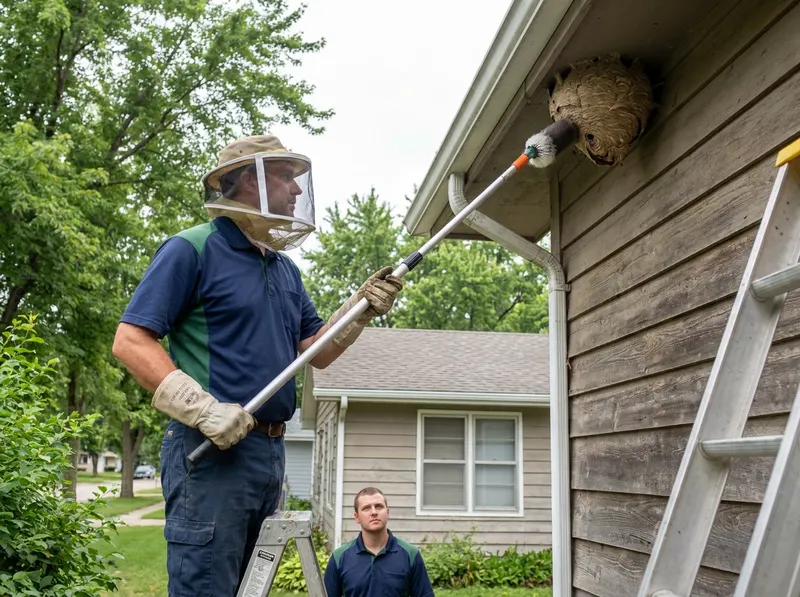
Stinging insect colonies compromise domestic access routes and threaten structural building envelopes when left unchecked throughout Buena Vista County. In established architectural pockets like the Seneca Street Historic District and College Hill, vintage multi-plane rooflines, unbaffled attic vents, and open soffits offer ideal shelter for bald-faced hornets and aerial paper wasps. These insects establish paper-carton nests behind fascia boards or inside wall voids, where larval moisture rot and drywall chewing can breach residential interior rooms. Along lakeside microclimates near Emerald Park, Lakeside, and the Sunrise Pointe Area, continuous moisture along lakeshore tree lines sustains high insect prey populations, accelerating subterranean yellowjacket nest expansion in landscaping berms, railroad ties, and structural foundation margins.
Intervention requires a decisive choice between localized chemical knockdown and full-scope physical extraction. Aerosol sprays from retail outlets frequently trigger defensive swarming without penetrating the central brood comb, driving yellowjackets deeper into wall cavities and through baseboards into interior spaces. Professional eradication pairs high-pressure micro-encapsulated pyrethroid injection or botanical dusts directly into the flight vestibule, resulting in 100% worker mortality within 24 hours. The physical detachment of the nest follows immediately: removing the queen, larvae, and pheromone-marked envelope eliminates secondary scavenging by dermestid beetles and prevents re-colonization the following spring. Chemical knockdown alone leaves proteins behind that attract secondary household pests; full-service removal eliminates the biological attractor entirely.
Properties bordering expansive turf areas such as Frank Starr Park, Chautauqua Park, or Harkers Field face aggressive late-season yellowjacket colonies during late August and September as wild nectar sources deplete. Subterranean nests excavated under turf roots or inside abandoned rodent burrows present severe puncture risks for maintenance personnel and domestic animals. Technicians apply directional wettable powders to subterranean gallery entrances under static pressure, achieving total nest death without excavating large trenches across established turf. Service protocols isolate the treated boundary, inspect perimeter entry points along foundation joints and window headers, and apply barrier chemistry that resists breakdown under intense Northwest Iowa summer solar cycles.
Preventing repeat nesting requires technical structural exclusion rather than continuous chemical soaking. Once hornets or wasps are removed from dormers near Buena Vista University or properties across North Central Storm Lake, primary entry crevices are documented for mechanical closure. Open utility penetrations, unscreened soffits, and gapped frieze boards are sealed using exterior-grade silicone caulk, copper mesh, or heavy metal screening. Stinging insect control operations prioritize total structural protection, operating on clear one-time fees rather than binding homeowners into perpetual service contracts, ensuring residential structures remain biologically sovereign throughout the year.
Every job gets a firm, written price after a free on-site visit.
Tell us about your stinging insect eradication & nest removal job in Storm Lake and we'll send a clear, written quote, usually the same day.
 Corviro Pest Management