Properties adjoining Storm Lake face localized humidity cycles, persistent wind patterns, and stagnant pocket zones that accelerate mosquito propagation. Residential parcels across Lakeside, the Sunrise Pointe Area,…
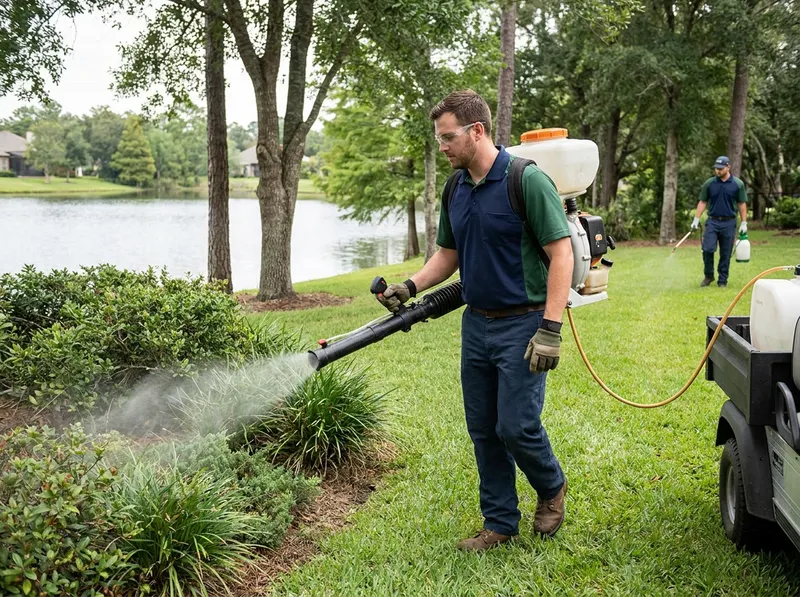
Properties adjoining Storm Lake face localized humidity cycles, persistent wind patterns, and stagnant pocket zones that accelerate mosquito propagation. Residential parcels across Lakeside, the Sunrise Pointe Area, and near the Storm Lake Marina encounter dense swarms of floodwater mosquitoes following spring thawing and summer storm surges. In historical neighborhoods such as the Seneca Street Historic District and Frank Starr Park Area, dense deciduous canopies, ornamental shrubs, and aged drainage infrastructure hold damp leaf litter where female mosquitoes deposit eggs. Waterfront turf misting counteracts these conditions by placing micro-nozzles along perimeter fence lines, retaining walls, and shoreline docks, releasing botanical or synthetic pyrethroid mists at peak dawn and dusk vector activity hours to suppress incoming adult populations before they reach living quarters.
Automated waterfront turf misting systems serve properties that experience uninterrupted pressure from lake-effect breezes and adjacent public parks like Chautauqua Park and Awaysis Park. A manual backpack mist blower coats the undersides of leaves and brush, providing 21 to 30 days of control per visit, whereas installed automated tubing systems spray low-volume mists on programmable digital timers, maintaining a perpetual exclusion perimeter against continuous windblown populations. The primary trade-off involves upfront infrastructure commitment: backpack barrier spraying entails zero equipment installations on the property and lower entry pricing, but demands recurrent bi-weekly or monthly visits, whereas an automated turf misting line requires dedicated plumbing lines, power connections, and ongoing tank fluid refills. In neighborhoods like College Hill, Emerald Park, and North Central Storm Lake, stand-alone seasonal foliage barriers provide sufficient protection without hardware installation, whereas parcels directly bordering King's Pointe Waterpark Resort or lakefront shorelines require the continuous perimeter suppression of plumbed misting lines.
Treatment execution follows four distinct phases: 1. A physical yard inspection identifies standing water holding areas, French drains, and unmanaged brush zones across the property lines. 2. A technician applies bacterial larvicides (Bacillus thuringiensis israelensis) to water collection points that cannot be physically drained, neutralising developing larvae within 24 hours. 3. A calibrated power mister disperses microencapsulated pyrethroids onto the underside of broadleaf foliage, turf perimeters, and vertical resting surfaces up to ten feet high, creating an immediate knockdown zone. 4. Post-application parameters require a 30 to 45-minute dry window before children or domestic animals re-enter the lawn, ensuring active residues bind securely to organic leaf surfaces to resist light rainfall and sprinkler cycles without transferring onto skin or fur. Ongoing seasonal protection operates across Northwest Iowa from May through late September, concluding when nighttime temperatures consistently register below 50 degrees Fahrenheit.
Every job gets a firm, written price after a free on-site visit.
Tell us about your mosquito reduction & waterfront turf misting job in Storm Lake and we'll send a clear, written quote, usually the same day.
 Corviro Pest Management